
STUDIO / EST. 2018 · CINCINNATI OH
We design the whole first.
Backbeat is built on gestalt theory: people perceive wholes before parts. Everything about how we work follows from taking that seriously.
GESTALT
Before anyone reads a frame, they have already read the room.
An audience never experiences your content as parts. They experience the relationships: the rhythm between screens, the way a room and its light behave together, whether a brand moves the same way on a facade as it does in a feed. Most studios design the parts and hope the whole shows up. We work in the other direction.
Every engagement starts with the whole: what should this brand feel like as one moving thing? Then we build the system that produces the parts: the templates, the show control, the content engine. The parts inherit the whole, which is why the tenth deliverable is as coherent as the first, and why a Backbeat room reads as one experience instead of a collection of effects.
This is also why we write our own software and run our own playback. You cannot design the whole if you only control some of the parts.
ONE PRINCIPLE PER DISCIPLINE
- PROJECTION MAPPINGFIGURE AND GROUNDA building is ground until we make it figure. Mapping is the craft of controlling that flip.
- INTERACTIVECLOSUREPeople complete what is incomplete. Installations leave the gap only a participant can close.
- MOTION DESIGNCOMMON FATEWhat moves together reads as one thing. Timing is identity.
- MOTION SYSTEMSCONTINUITYA brand that shows up every day, moving the same way, reads as one continuous thing instead of a pile of posts.
The next decade of brand experience is not more screens.
It is spaces and systems that behave like one organism. Content that generates itself inside a designed whole. Rooms that respond to the people standing in them. Brands that move the same way everywhere they appear, because one system drives all of it.
Advancements in AI make that buildable by a small team. Gestalt is what keeps it coherent instead of chaotic: when a system can produce anything, the discipline of the whole is the only thing standing between a brand and noise.
That is the work Backbeat is set up for. Not making more parts. Designing wholes that can keep making their own.
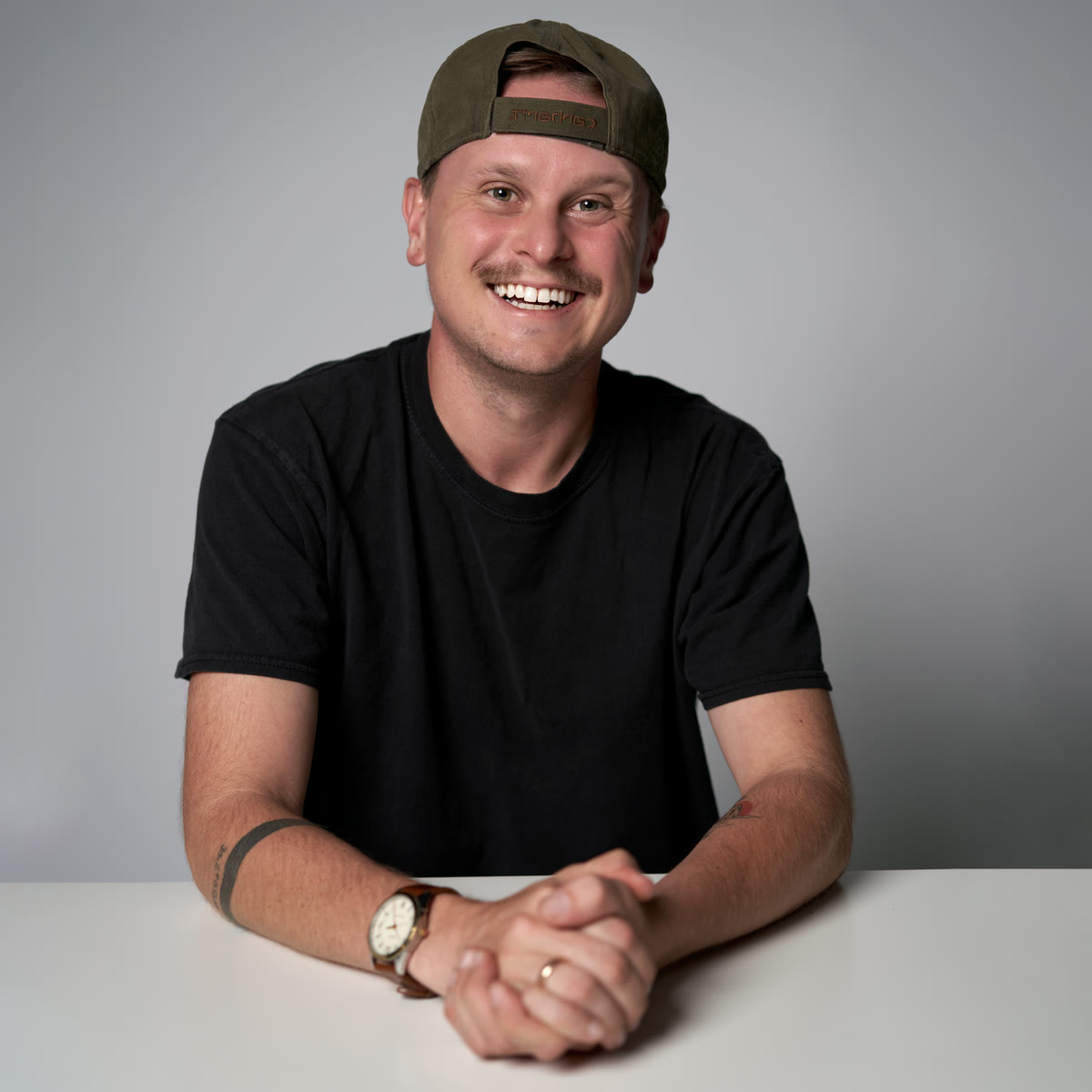
Backbeat was founded by Chris Glenn in Cincinnati in 2018. Chris runs every engagement: strategy, production, delivery, one point of contact from the first call to the last cue. Specialists join per project, so the team is always shaped to the work.
That structure is why a small studio has delivered at the Super Bowl, at Netflix House, and on the facades of city halls. Specialists who want in on projects like these: chris@backbeatmotion.com.
THE PARTNER MODEL
Much of our biggest work arrives through production companies, agencies, and event producers: Omnispace360 at the Super Bowl, Jetblack Film Co at Netflix House, Ansera at AI New York Tech Week, J Wagner Group in Louisville. Ansera owned the client relationship; Backbeat built the thing that had to work in the room. That is the model.
- Credited or invisible in front of your client. Your call, stated up front.
- A working prototype before the event, approved by you before your client ever sees it.
- One accountable contact from scope to strike, on site for the night.
- Honest scoping in days, not weeks, including the version where we tell you we are not the right fit.
SAME FOUR STEPS, EVERY TIME
- 01
Brief and discovery
The moment, the space, the audience, the constraint. We scope fast and tell you early if we are not the right fit.
- 02
Concept and scope
One clear direction with the technical plan and the price attached. No decks of five vague options.
- 03
Build and proof
Content, software, and playback built and tested together. You see it working before your audience does.
- 04
Deliver and run
We are on site for the night and on call after it. If the system should keep producing, it does.
Talk to the person who will build it.
A venue, an event, a launch, a network of screens. Bring the problem; we will bring the system. You will hear from Chris directly.